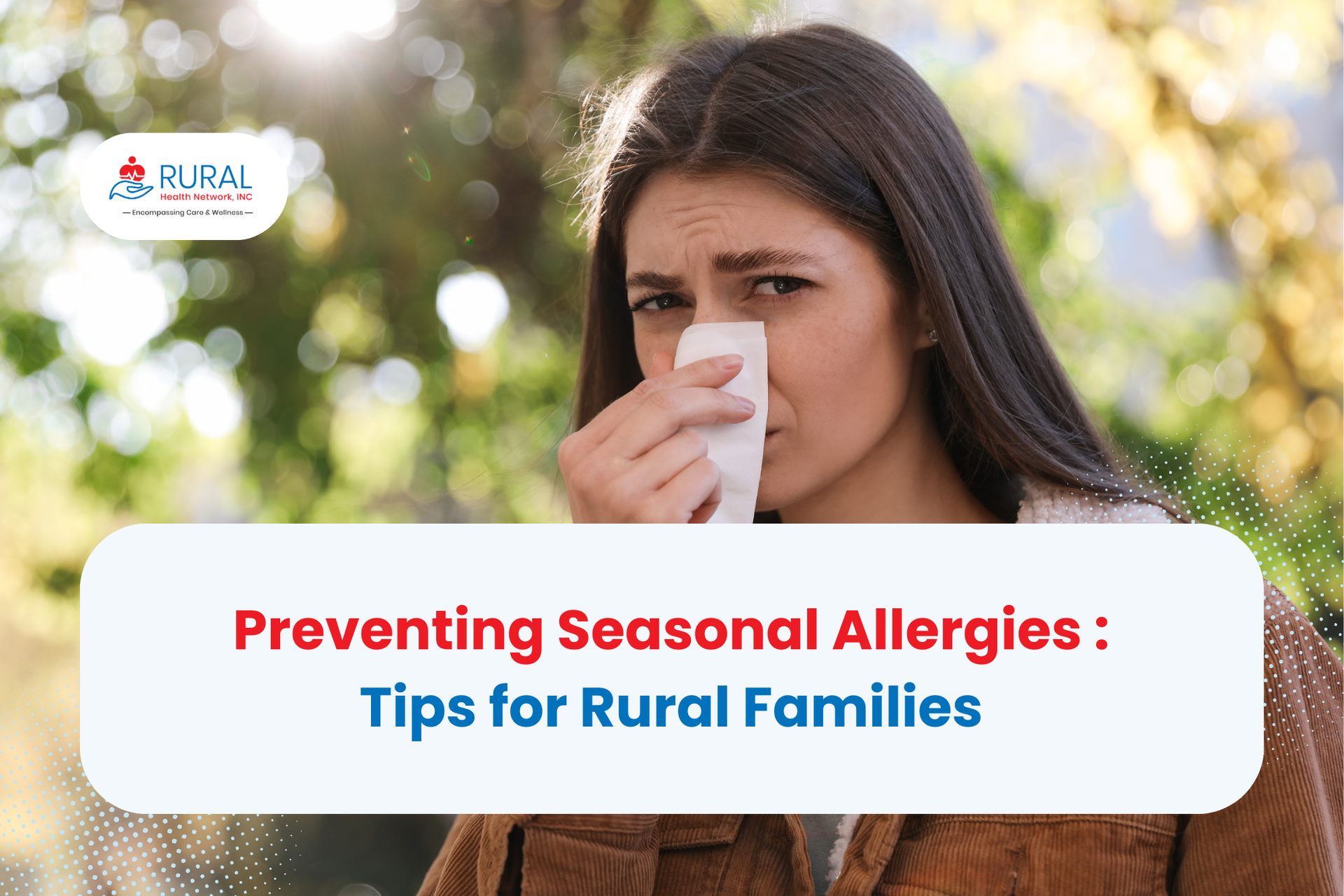
Seasonal allergies can make even the simplest of days exhausting. Sneezing, itchy eyes, and a stuffy nose can turn chores or outdoor work into an endless challenge, especially for residents in rural areas during peak pollen season.
Living in the countryside often means more time outdoors, which increases exposure to allergens, such as tree pollen, grass, weeds, and mold. Even everyday activities, from tending gardens to walking along dusty country roads, can trigger sneezing, watery eyes, or fatigue. These symptoms can disrupt work, sleep, and daily routines.
Fortunately, allergies can be managed and, even better, prevented. With the right habits and support from family medicine and preventive care, you can stay ahead of symptoms. With
Rural Health Network,
you can take proactive steps to enjoy the seasons without letting allergies slow them down.
Keep Your Home Allergy-Ready
What Are Seasonal Allergies?
Seasonal allergies, also called hay fever or allergic rhinitis, happen when your body overreacts to substances like pollen or mold. Your immune system treats these allergens as threats and releases chemicals, mainly histamines, which cause sneezing, itchy eyes, and a runny or stuffy nose.
Its symptoms appear at different times because plants release pollen in specific seasons. Tree pollen dominates spring, grasses flare in late spring and summer, and weeds peak in fall. Mold can appear whenever moisture and warmth create ideal conditions. Knowing these patterns helps you prepare and manage reactions before they even hit.
Seasonal Allergy Symptoms to Watch For
Spotting allergy symptoms early helps you manage any reaction before it significantly affects your daily life. Rural residents often notice symptoms during outdoor work, gardening, or time outside.
Common signs of seasonal allergies include:
- Sneezing
– sudden or frequent, especially after being outdoors
- Runny or stuffy nose
– congestion or constant need to blow your nose
- Itchy or watery eyes – irritation that makes blinking or focusing uncomfortable
- Scratchy throat – caused by pollen or airborne allergens
- Fatigue or headaches – often from nasal congestion or disrupted sleep
Even mild symptoms are worth noticing. Early recognition helps you adjust routines and take preventive steps before allergies worsen.
Why Seasonal Allergies Can Be Worse in Rural Areas
Seasonal allergies often feel stronger in rural communities because everyday life brings more contact with allergens and environmental triggers. Our
healthcare providers at Rural Health Network
are here to help residents understand these challenges and take preventive steps to stay comfortable.
- Higher exposure to allergens: Spending more time outdoors increases contact with pollen, grasses, crops, and dust, which can trigger sneezing, itchy eyes, and congestion.
- Outdoor work and daily activities:
Farming, gardening, or even walking along country roads expose residents to allergens repeatedly throughout the day.
- Environmental factors:
Wind carries pollen across long distances, and dry conditions stir up dust and mold spores, intensifying symptoms.
Common Triggers of Seasonal Allergies and Why They Occur
Understanding what causes seasonal allergies helps residents plan ahead and take simple preventive steps. Different plants and environmental factors release allergens at different times of the year, so knowing the patterns can help keep symptoms under control.
- Tree pollen (Spring: March–May)
Trees release pollen as they bloom, often covering rural areas in fine dust that can trigger sneezing and itchy eyes.
- Grass pollen (Late Spring to Summer: May–July)
Grasses dominate fields and lawns, releasing pollen that spreads easily with wind or outdoor activity.
- Weed pollen (Fall: August–October)
Plants like ragweed flourish in late summer and fall, producing pollen that can linger in the air and cause irritation.
- Mold (Humid or Damp Environments, Year-Round in Certain Areas)
Mold spores grow in soil, barns, and damp areas around homes, especially after rainfall or in shaded, moist spots.
Wind carries pollen across long distances, while dry conditions stir up dust and allergens, increasing exposure for anyone spending time outdoors.
By knowing the types of seasonal allergies and when they occur, residents can take proactive steps to reduce exposure, planning activities accordingly to stay comfortable throughout the year.
Practical Tips to Prevent Seasonal Allergies
Taking steps to prevent seasonal allergies helps you stay comfortable while enjoying the outdoors. Even small changes in daily routines can reduce exposure to pollen, mold, and other allergens common in rural areas.
Outdoor Prevention
- Check pollen counts
– Stay informed about daily pollen levels and plan outdoor activities accordingly.
- Limit outdoor exposure during peak times
– Pollen levels are usually highest in the morning and on windy days.
- Wear protective items
– Sunglasses, wide-brimmed hats, or masks can help reduce contact with allergens.
At-Home Prevention
- Keep windows closed during high-pollen days
– This helps prevent pollen from entering your home.
- Clean frequently to reduce allergens
– Dust and vacuum regularly, especially in bedrooms and living spaces.
- Use air filters if possible
– Air purifiers or clean HVAC filters can improve indoor air quality.
Personal Habits
- Shower after outdoor exposure – Rinse off pollen from hair and skin to prevent irritation.
- Change clothes after being outside – Outdoor clothing can carry pollen indoors.
- Wash bedding regularly
– Frequent washing keeps allergens from accumulating.
Simple Ways to Manage Seasonal Allergies Symptoms Early
Even with preventive habits, seasonal allergies can still cause mild discomfort. Acting early when symptoms appear helps you find quick relief and maintain your daily routine.
- Over-the-counter antihistamines:
These can help reduce sneezing, itching, and runny noses. Always follow the instructions on the label and consult your family medicine provider if you have questions.
- Saline nasal rinses: Flushing your nasal passages with saline helps remove pollen and reduce congestion.
- Hydration and rest:
Drinking water and getting enough sleep support your body’s natural defenses and ease symptoms.
- Avoid known triggers:
Limit exposure to outdoor allergens whenever possible, especially during high-pollen days or windy conditions.
Supporting Rural Communities Through Preventive Care
Preventive care is essential for managing seasonal allergies, especially in rural areas. Early attention to symptoms and healthy habits helps keep allergies from interfering with daily life. Primary care providers guide patients with practical advice, monitoring, and support.
Rural Health Network is dedicated to accessible, community-based care. We help families stay healthy through education, guidance, and preventive services tailored to rural living.
Family Medicine
Family medicine provides ongoing care that tracks your overall health throughout the year. Providers:
- Monitor recurring symptoms, such as seasonal allergies.
- Identify patterns and trends over time.
- Offer personalized strategies for prevention and management.
- Manage related conditions, like asthma or sinus issues.
Wellness Exams
Wellness exams are scheduled checkups focused on prevention and early detection. During these visits, providers:
- Review current symptoms and overall health.
- Give guidance to reduce exposure to seasonal allergens.
- Track seasonal changes and adjust care plans.
- Screen for potential complications before they become serious.
By combining ongoing family medicine with regular wellness exams, Rural Health Network helps residents stay ahead of seasonal allergies while maintaining long-term health and well-being.
Choose Relief and Comfort This Seasonal Allergy Season
Seasonal allergies are common, but you don’t have to let them take over your life. Paying attention to early seasonal allergies symptoms and taking simple preventive steps can help you stay active, comfortable, and ready to enjoy the outdoors at the right time.
Small changes, like checking pollen levels, keeping your home clean, and staying hydrated, paired with regular wellness exams and guidance from family medicine providers, keep allergies from slowing you down.
Rural Health Network is here to help rural families stay healthy, prepared, and empowered every season.
Healthy Families Start with Preventive Care
Frequently Asked Questions
Can simple habits prevent severe allergy attacks?
Yes. As a first step, we recommend monitoring local pollen patterns to prevent symptoms. Common triggers to track include ragweed, grasses, flowering trees, and crops like wheat or corn.
Are over-the-counter allergy medicines safe in the long-term?
Most over-the-counter antihistamines are safe when taken as directed. Checking with your family medicine provider ensures the medicine is right for your age, health conditions, and any other medications.
Do indoor allergens matter in rural homes?
Yes. Dust, mold, and pet dander can trigger symptoms even when you’re inside. Regular cleaning, using air filters, and keeping windows closed on high-pollen days help reduce exposure.
Is allergy prevention different in humid vs dry rural areas?
Yes, environmental conditions matter. Humid areas encourage mold growth, while dry areas increase dust and pollen exposure. Adjusting preventive habits to your local environment helps control symptoms.