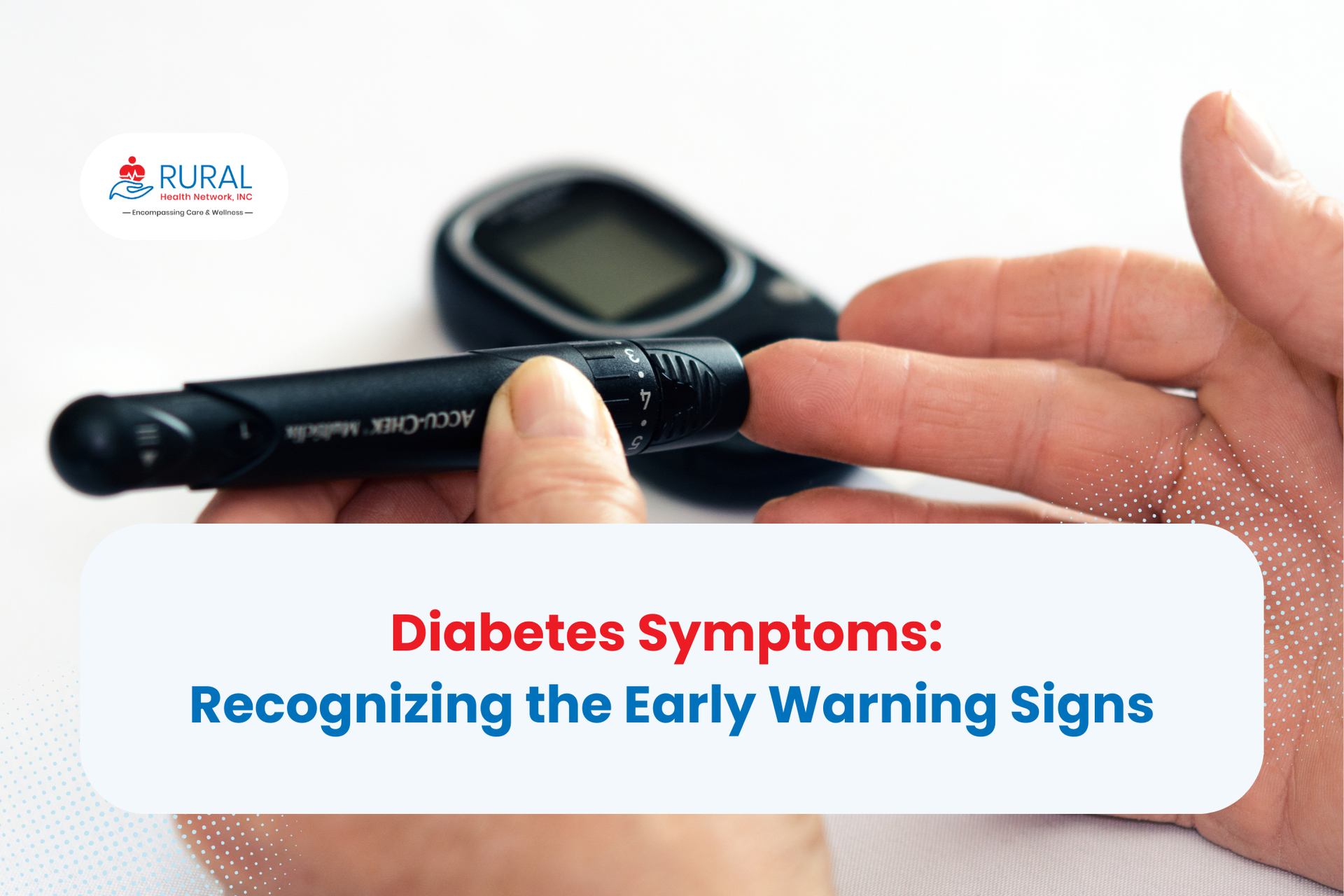
Over 40 million Americans are living with diabetes, and about 11 million don’t even know they have it. In its early stages, diabetes signs can be easy to miss because symptoms don’t often feel mild, gradual, or easy to brush off.
If you’re feeling concerned, take a deep breath. Diabetes, when caught early, is completely manageable. We can take this one step at a time, and you’re already doing the first step right now just by reading this. Let’s help you understand what diabetes is and its symptoms.
Rural Health Network is here to walk alongside you and bring early awareness so you can take control, make meaningful changes, and live a full, healthy life. And if you ever need it, our wellness exams and chronic care management services can help you take the first step in the right direction.
Spot Early Symptoms and Safeguard Your Well-Being
What Is Diabetes?
Simply put, diabetes is a condition that affects how your body manages blood sugar (also called glucose). Blood sugar is your body’s main source of energy, but for it to work properly, your body needs insulin.
When insulin doesn’t work the way it should—or isn’t made at all—blood sugar builds up in the bloodstream instead of being used for energy. Over time, this can lead to noticeable diabetes symptoms if left unmanaged.
There are different types of diabetes, such as:
- Type 1 Diabetes
This type usually develops early in life and happens when the body stops making insulin. It’s not caused by lifestyle choices and requires ongoing medical care.
- Type 2 Diabetes
This is the most common and often develops gradually, which is why many people don’t notice symptoms right away. With Type 2 diabetes, the body doesn’t use insulin as well as it should, or doesn’t make enough of it over time.
- Gestational Diabetes
It occurs during pregnancy and usually goes away after childbirth. However, it can increase the risk of developing Type 2 diabetes later in life.
What About Prediabetes?
Prediabetes means blood sugar levels are higher than normal but not yet diabetes. It often has no symptoms, which makes routine screenings important. Early lifestyle changes can help prevent or delay type 2 diabetes.
One of the biggest myths about diabetes is that it only affects people who eat too much sugar. In reality, diabetes is influenced by many factors, including genetics, age, activity level, access to healthy food, and overall health.
Why Early Symptoms Are Often Missed
One of the biggest reasons diabetes goes undiagnosed is that diabetes early signs look like common, harmless issues, such as:
- Feeling worn down from work or family responsibilities
- Stress or poor sleep
- Dehydration
- Natural changes that come with aging
Common Early Signs and Symptoms of Diabetes
So, what are the symptoms you should be wary of?
Do keep in mind that experiencing one symptom doesn’t mean you have diabetes. What matters is noticing patterns, especially when symptoms show up together or don’t go away. Many diabetes early signs are subtle and easy to overlook at first.
- Increased Thirst and Frequent Urination
Feeling unusually thirsty, even when you’re drinking enough water, can be an early sign.
Feeling tired now and then is normal. But this is a different kind of fatigue, especially the kind where you feel drained even after a full night’s sleep.
If you notice your kid feeling off or showing flu-like symptoms, it’s always best to keep them home.
Blood sugar level can affect the fluid balance in the eyes, leading to temporary changes in vision.
- Slow-Healing Cuts or Frequent Infections
Noticing that the cut on your hand is taking forever to heal? Or are infections getting more common than usual? That’s usually a sign.
- Tingling or Numbness in Hands or Feet
Some people experience a mild tingling, numbness, or “pins and needles” sensation, usually in the hands or feet. This can be an early sign of nerve involvement related to blood sugar levels.
Who Is at Higher Risk for Diabetes?
Having one or more risk factors doesn’t mean you’ll get diabetes; it simply highlights areas to watch and take action.
Genetics
If a parent or sibling has diabetes, your risk can be higher. Genetics can play a role in how your body produces or uses insulin. Knowing your family history helps you and your healthcare provider monitor your health more closely.
Age
Diabetes can start at any age. Type 1 diabetes can already
appear even at the ages of 4–7. The risk for Type 2 diabetes increases with age, particularly after age 45.
Physical Inactivity
Having a sedentary lifestyle or being less active can affect how your body uses insulin and manages blood sugar. You don’t really need to go out every day to be active. Even regular movements like walking, gardening, or doing chores are enough.
Diet and Access Challenges
Limited access to fresh fruits, vegetables, and healthy foods can make it harder to maintain balanced blood sugar levels. Convenience foods high in sugar or refined carbs can increase risk over time.
When Should You See a Healthcare Provider?
If you notice diabetes symptoms that persist, appear together, or don’t improve, it’s time to reach out to a
healthcare provider. Early action can prevent complications and make diabetes easier to manage.
It’s time to consult your doctor if:
- Your symptoms don’t improve with rest or lifestyle changes.
- You have a family history of diabetes or other risk factors.
- Are 45 years or older, or have a history of gestational diabetes.
How Early Detection Can Change Outcomes
Catching diabetes early could be life-changing. It gives you a real chance to protect your health and stop serious problems before they start.
Why Early Diagnosis Matters
When you catch diabetes early, you can:
- Stop complications like heart disease, kidney damage, or nerve problems before they develop.
- Get your blood sugar under control while you still have the advantage.
- Take charge of your health instead of reacting to problems later.
Small Changes, Big Impact
You don’t need to flip your whole life upside down. Simple changes really do work, such as:
- Eat balanced meals that keep your blood sugar steady.
- Stay active—it boosts your energy and actually helps your body use insulin better.
- Check your numbers regularly so nothing catches you off guard.
Diabetes is manageable with the right support. Programs like our
wellness exams and
chronic care management empower you to spot diabetes early signs and stay on track.
The sooner you know, the sooner you can take control, and that can change your health for years to come.
Early Awareness Leads to Better Health
Paying attention to early diabetes symptoms gives you the power to act before problems grow. Every symptom you notice is a signal, and recognizing them early helps you take control and protect your health.
Rural Health Network
is here to support you with guidance, screenings, and resources so you never have to face these challenges alone.
Taking small steps today can prevent bigger issues tomorrow. Whether it’s scheduling a check-up, attending a wellness exam, or making simple lifestyle adjustments, each action moves you toward a healthier future. Don’t wait. Listening to your body now can make a lasting difference.
Know the Signs. Protect Your Health Today.
Frequently Asked Questions
Do diabetes symptoms differ by gender?
Yes. Women may notice yeast infections or weight changes, while men might see low energy or erectile issues.
Can lifestyle or diet mask early symptoms?
Sometimes. For example, staying very active or eating carefully may temporarily hide fatigue or weight changes, but blood sugar issues can still develop silently. Routine screenings are essential.
How soon should I see a healthcare provider if I notice subtle symptoms?
Don’t wait for multiple severe symptoms. Persistent or unexplained changes, even if mild, should prompt a check-up. Early detection leads to better outcomes.
Are mild or intermittent symptoms something to worry about?
Yes. Even mild or occasional signs, such as slight fatigue, thirst, or tingling in the hands or feet, should not be ignored. Patterns over time matter more than intensity, and early evaluation can prevent complications.